Most Dynamics 365 Sales deployments handle the sales team perfectly. Partners and suppliers still run on whatever happens outside the system: email threads, shared spreadsheets, a phone call to check on a quote.

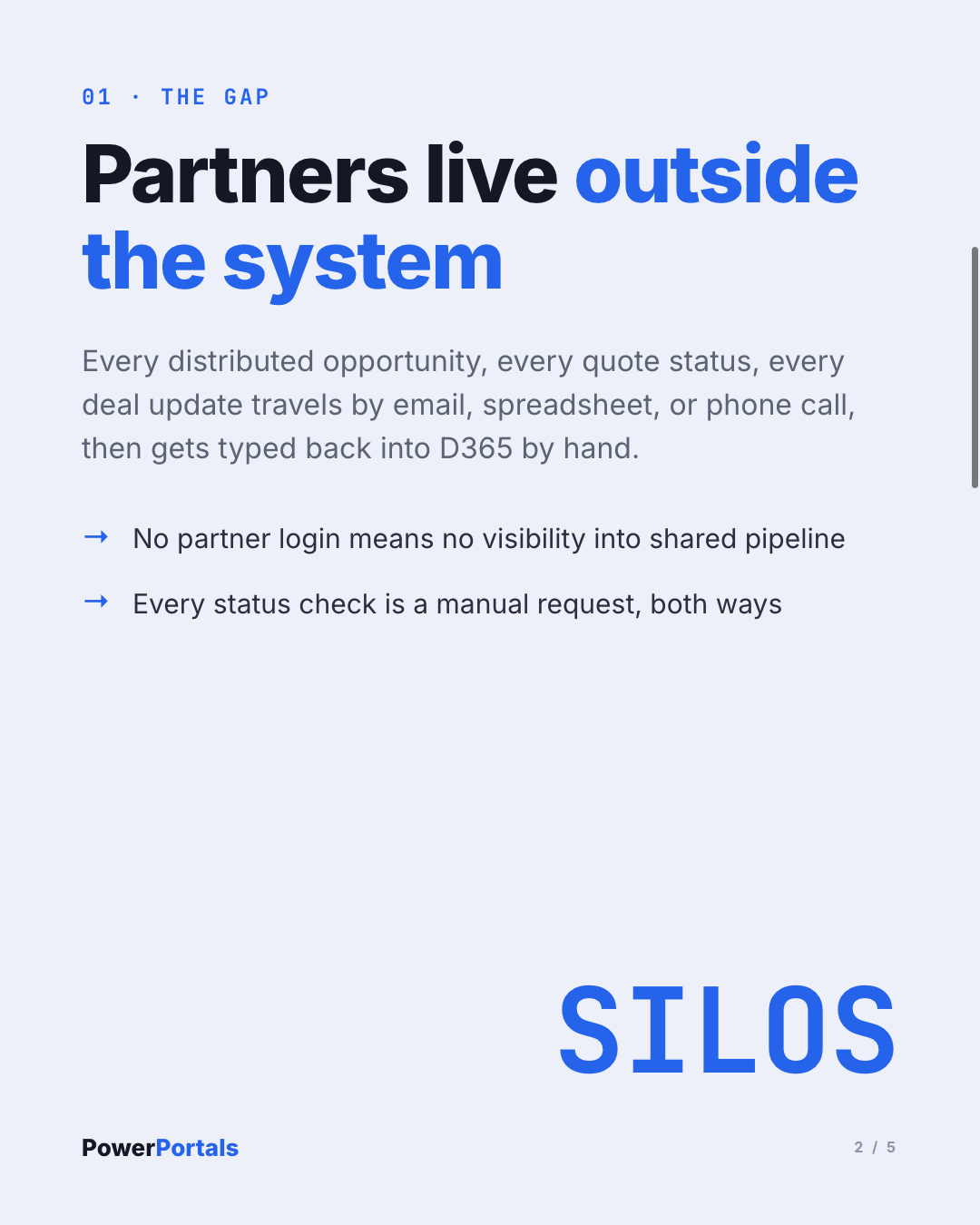
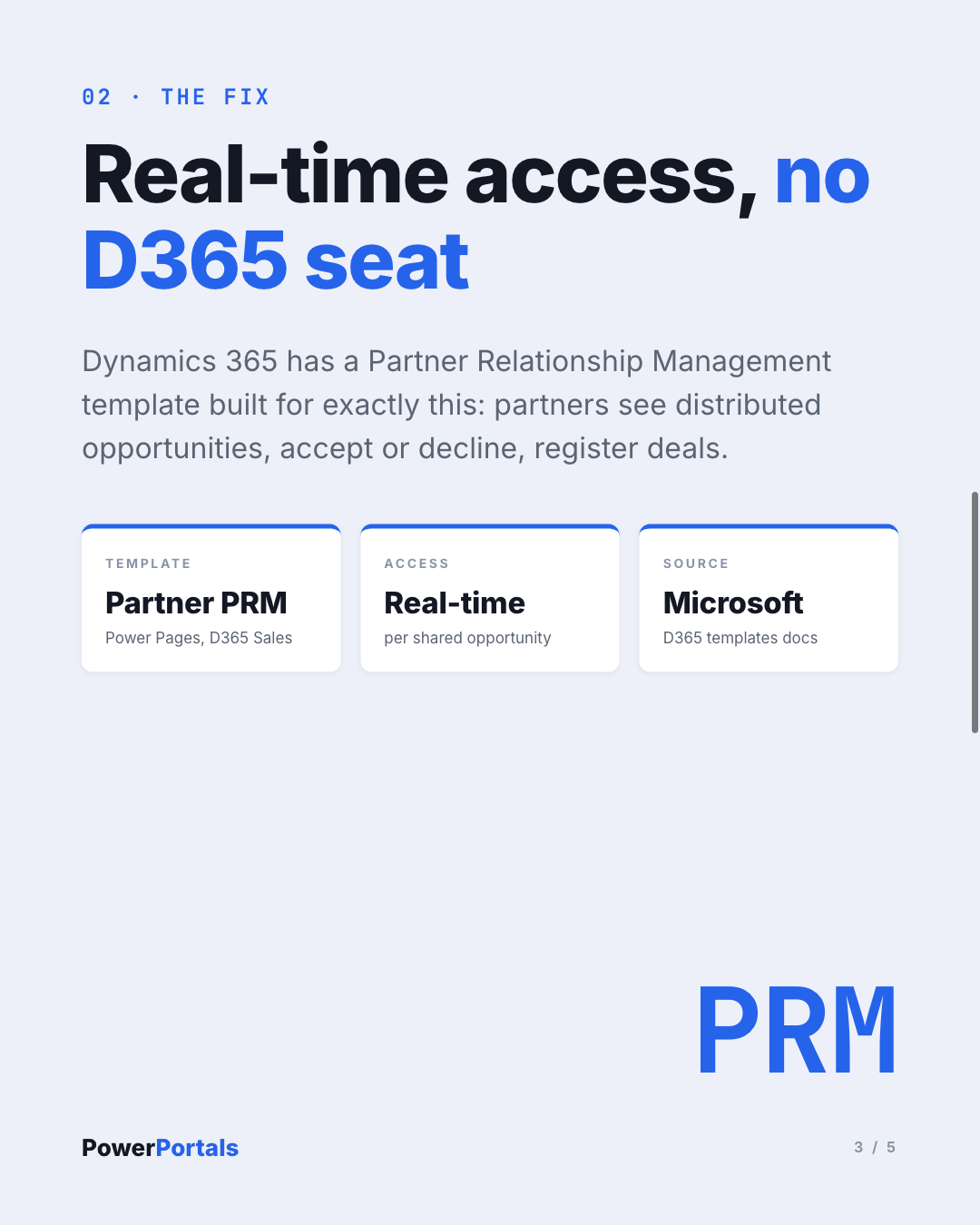
Dynamics 365 has a Partner Relationship Management template built for exactly this gap. It gives resellers, distributors, and suppliers real-time access to their own stage of a shared deal: partners see distributed opportunities, accept or decline them, register a deal for exclusivity, and collaborate on notes, without a D365 seat and without a login to your internal system.
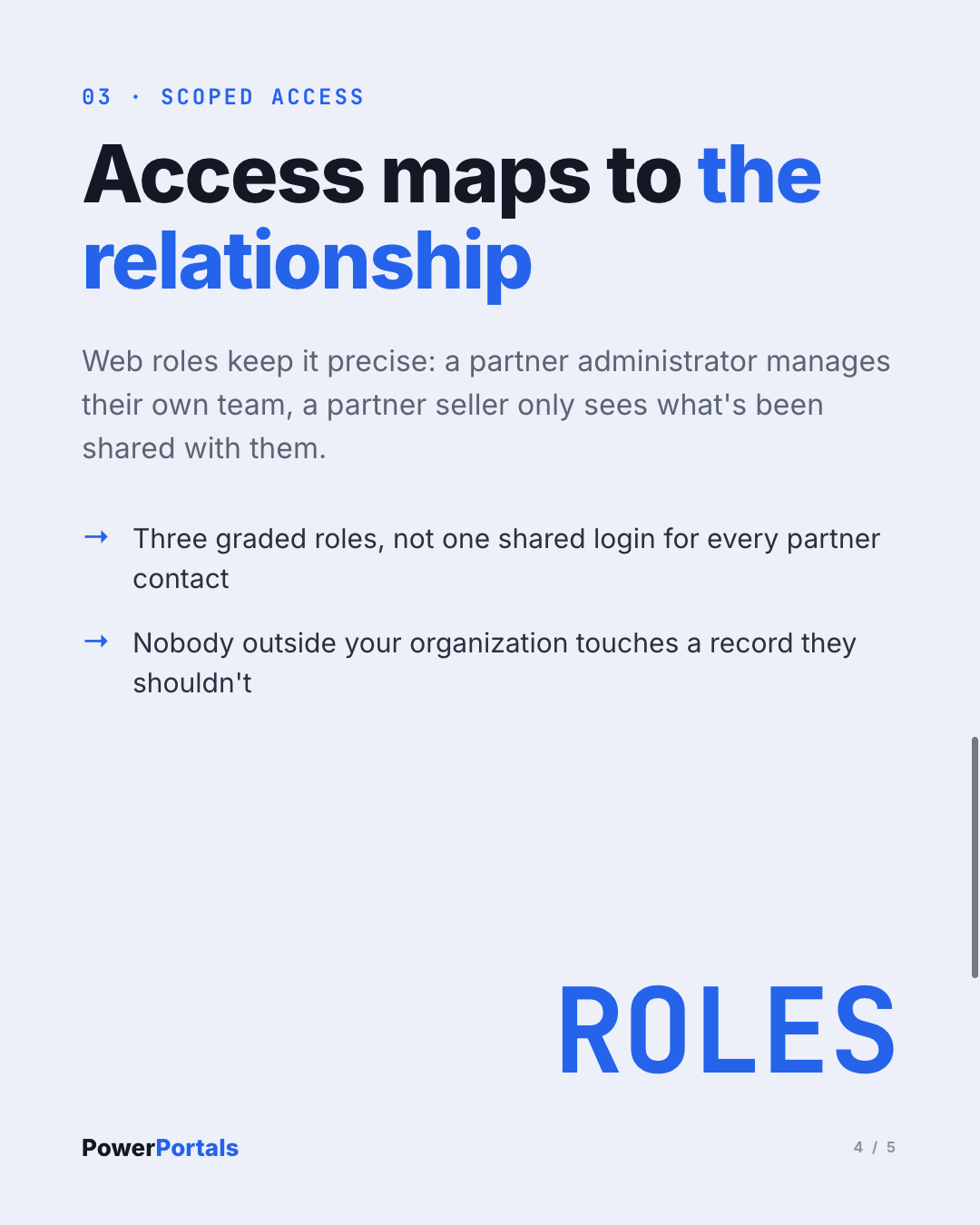
The web roles behind it are specific enough that access maps to a real business relationship, not a shared inbox. A partner administrator manages their own team and account, a partner seller only sees what has been shared with them. Nobody outside your organization touches a record they shouldn't.
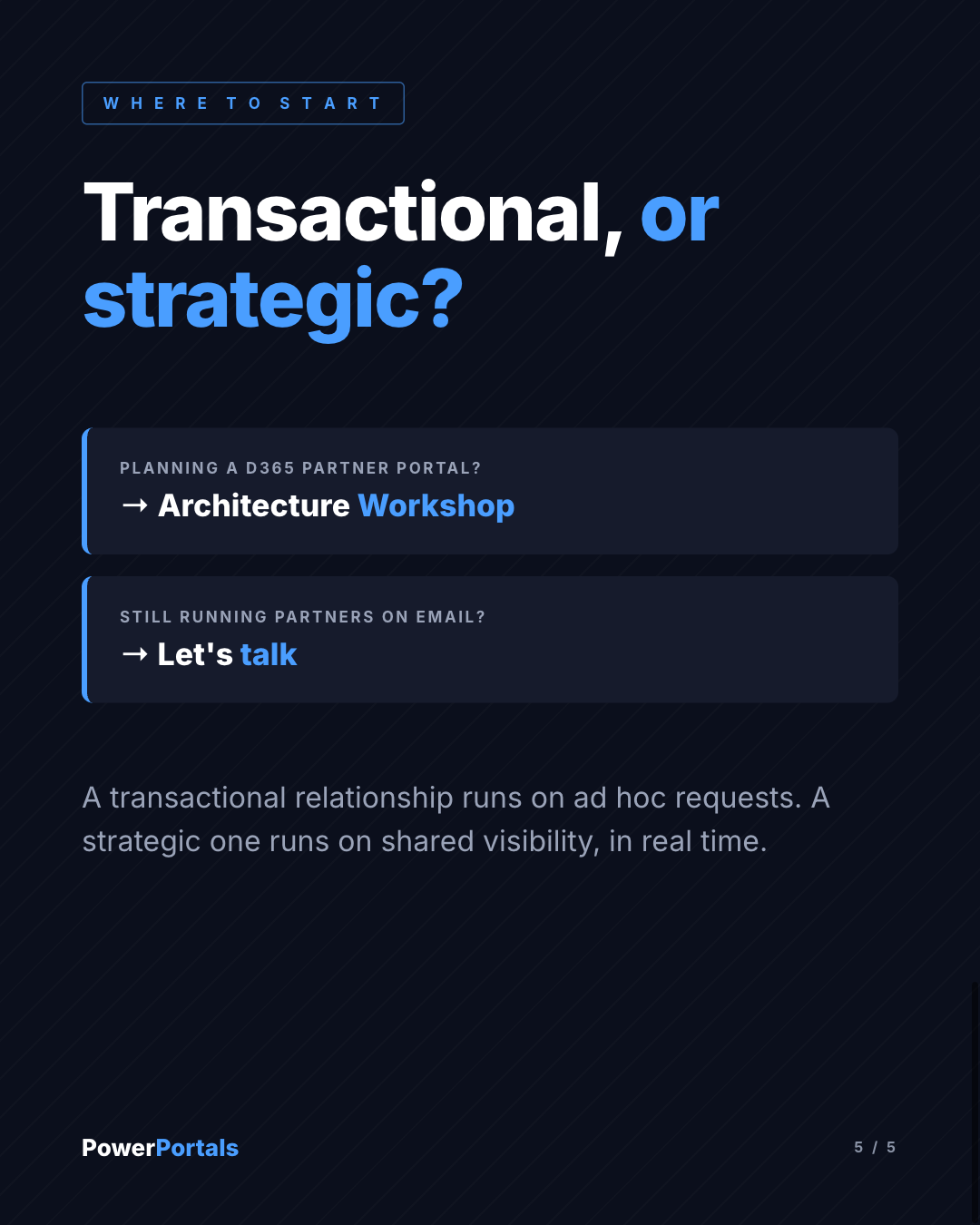
This is the difference between transactional and strategic. A transactional relationship runs on ad hoc requests: send me the quote, tell me the status. A strategic one runs on shared visibility into the same pipeline, in real time, without anyone having to ask.
Where to go deeper: For what authenticated external access costs at scale (capacity packs, total cost of ownership), see Power Pages Costs & Licensing: The Complete Overview.
If your partner or supplier relationships still run on email, that's not a partner problem, it's an architecture decision nobody made yet. I map exactly this kind of access model in an Architecture Workshop, before a single portal role gets built.